 GUMMY SUPPLEMENT OEM / ODM
Pectin vs Gelatin Gummies: Choosing the Right Base for Your Brand
Compare pectin and gelatin by origin, texture, material specification, dietary positioning and sample approval for your next private-label gummy range.
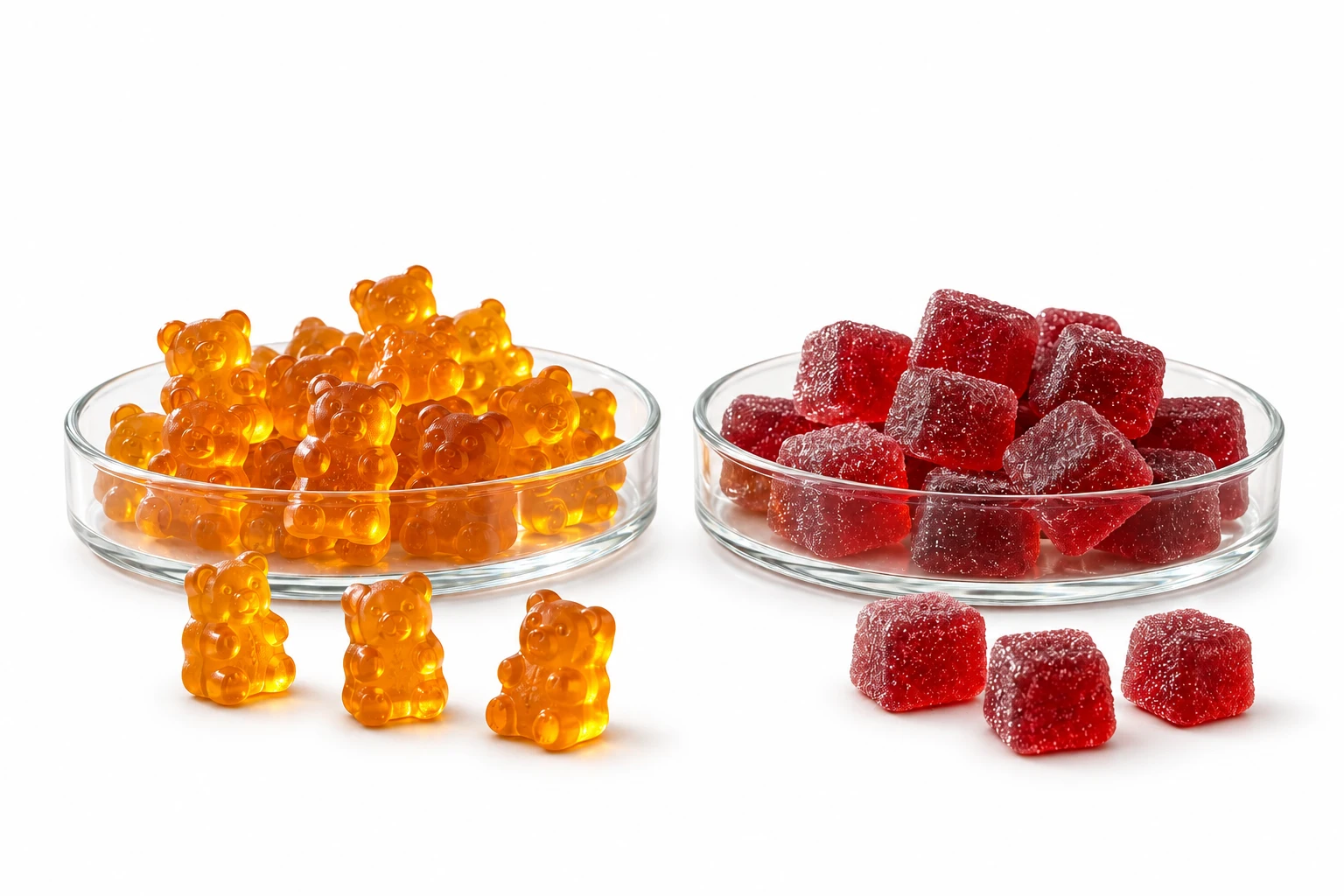
Why the base is a product decision
The gelling system helps define how a gummy bites, chews and holds its shape. It also interacts with the complete formulation and manufacturing process. Choosing a base only because it is familiar, or because another brand uses it, can leave the development team with conflicting targets for taste, ingredients and positioning.
Begin with the consumer experience and the ingredients you want to include. A conventional chewy bear, a fruit-jelly direction and a softer specialty bite can lead to different development briefs. Compare options through custom gummy formulation rather than treating the gelling agent as a one-for-one replacement.
Pectin and gelatin: a buyer’s comparison
| Review point | Pectin direction | Gelatin direction |
|---|---|---|
| Ingredient origin | Plant-derived; commonly obtained from citrus or apple materials. | Animal-derived protein; specify the material source. |
| Texture reference | Can support fruit-jelly or other textures, depending on grade and formula. | Can support elastic or melt-in-the-mouth textures, depending on material and formula. |
| Material specification | Identify the pectin grade and relevant setting characteristics. | Identify the gelatin source and relevant gel-strength specification. |
| Dietary positioning | A plant-derived base can support a vegan brief; check every other ingredient. | An animal-derived base does not fit a vegan brief; assess any other claimed suitability separately. |
| Development review | Match the grade with the formula and processing requirements. | Match the material with the target chew and processing requirements. |
| Commercial approval | Review the complete sample and selected pack. | Review the complete sample and selected pack. |
For ingredient background, Cargill describes pectin’s plant origin and grade-dependent gelling behavior, while GELITA explains gelatin’s reversible gel properties. Supplier descriptions concern their ingredients, not automatic performance guarantees for a finished MITEYO product.
A grade name matters more than a broad category
“Pectin” is not a single interchangeable material. Grades differ in their setting behavior and formulation requirements. Likewise, two gelatin materials can produce different results at the same nominal inclusion. The purchasing record should identify the selected material, not merely the word printed in a product presentation.
For sample development, ask the team to document the base, formula version and processing assumptions. If a buyer changes the nutrient blend or sweetness direction, revisit the full sample rather than assuming the earlier texture will remain. A sample comparison is most useful when the intended serving and flavor are comparable and any remaining differences are recorded.
Separate dietary positioning from the whole formula
A pectin base does not make a formula vegan if another ingredient is animal-derived. Review the complete ingredient list, including flavors, colors, coatings and other inputs relevant to the intended claim. Similarly, an animal source or a selected gelling material alone does not establish Halal suitability; the relevant materials, manufacturing scope and documentation need to align.
A sugar-free or reduced-sugar brief also requires a full formulation discussion. The sweetness system, desired texture and selected gelling approach need to work together. Read our zero-sugar gummy brief guide before treating the sugar statement as only an artwork change.
Check the gummy inside its intended package
Do not turn a broad material comparison into an unconditional claim that a product will withstand all shipping conditions. Agree the intended storage and distribution environment, then evaluate the actual gummy and commercial package. The relevant questions include shape retention, surface condition, sticking, texture and the product-specific stability requirements.
Ask which properties will be checked at sample approval and which will be assessed during later storage work. A visually attractive sample is one milestone, not the entire qualification process. Our packaging and stability guide connects those decisions.
What to request from your gummy manufacturer
- A named base material and a sample linked to a clear formula version.
- A comparison against your agreed bite and chew reference.
- A review of the ingredient blend and intended daily serving.
- Documentation appropriate to the desired dietary positioning.
- A package proposal and a product-specific approval plan.
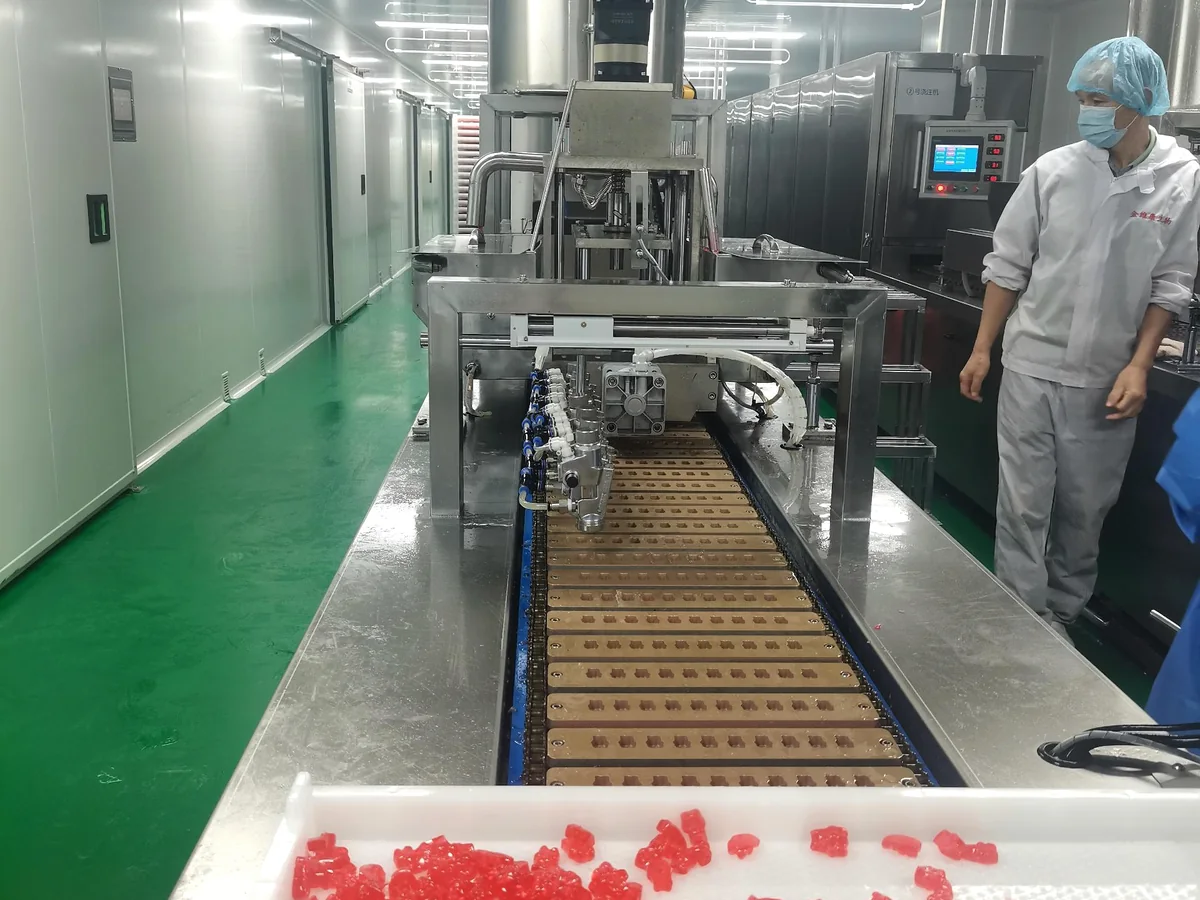
MITEYO develops gummies through our own manufacturing factory. Send the target market, formula direction, texture reference, dietary requirements and preferred pack to our project team. Starting quantities, formula feasibility and packaging are confirmed together; the comparison above is a framework for that discussion, not a fixed recipe.
Gummy manufacturing questions
Does using pectin make every ingredient in a gummy vegan?
No. Pectin is plant-derived, but a vegan brief requires review of the complete formulation, including other active ingredients, flavors, colors and coatings. The base is only one part of that review.
Can gelatin be replaced with the same weight of pectin in a gummy?
Do not assume a one-for-one substitution. The selected material grade, complete formula and setting process need to be redeveloped and assessed against the intended texture and serving.