 GUMMY SUPPLEMENT OEM / ODM
Questions to Ask About Heavy Metals Testing
Make scope, method and sampling frequency explicit.
Make scope, method and sampling frequency explicit.
Turn a broad request into a usable test brief
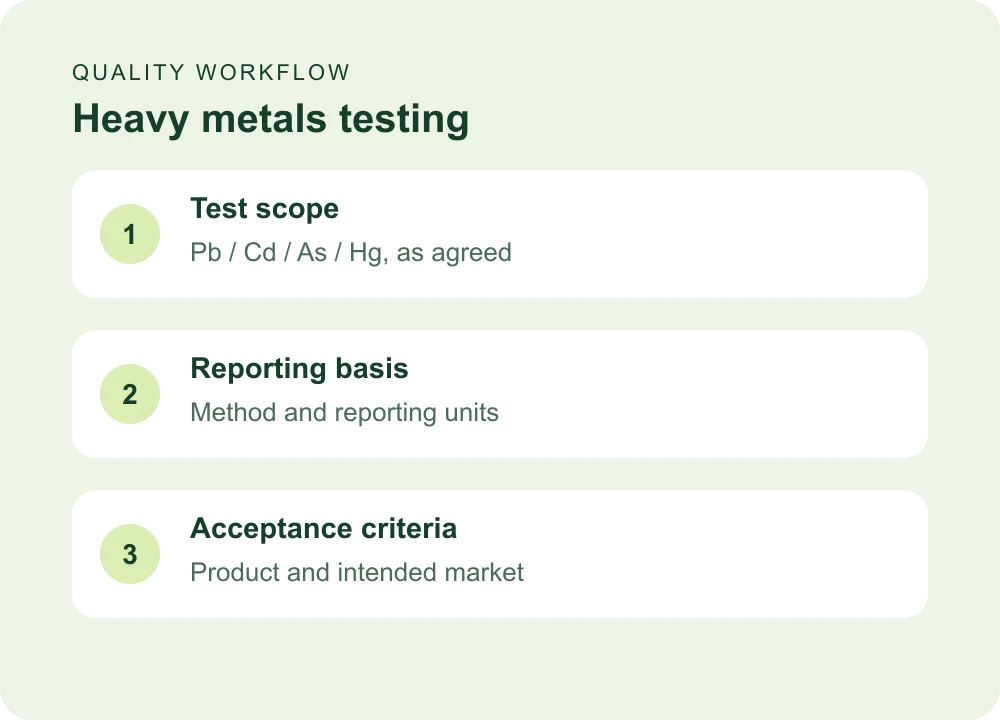
A request for heavy-metals testing becomes more useful when the product, ingredient blend and intended market are clear. Lead, cadmium, arsenic and mercury are common parameters to discuss; the actual scope and acceptance criteria should be agreed for the finished product.
Do not use a generic marketing statement as a substitute for a product-specific analytical brief. Ask which material or batch a report represents and whether it reflects the product being purchased.
Ask about units, methods and reporting
Confirm the units used in the specification and the laboratory report. Ask how the analytical method relates to the gummy matrix and what the reporting limits mean for the results. Where the scope requires a more specific analytical distinction, discuss it explicitly with the quality team and laboratory.
A number is difficult to interpret without its units, method context and acceptance criteria. Keep those items together when your team reviews results.
Define the sampling and batch link
Ask when the sample is collected, how it is identified and how it connects to a manufacturing batch. Clarify the testing frequency and the information needed when an ingredient source or formula changes.
Raw-material testing and finished-product testing provide different information. Agree how each fits into the supplier qualification and batch-release process for your product.
Prepare a quality discussion checklist
Bring the proposed ingredient blend, daily serving, intended market and required documentation. Request the agreed parameters, method references, units and batch identification. Decide with your quality team how results will be reviewed and what happens if a result needs investigation.
Your next step: include the test brief in the product specification discussion. This creates a clearer basis for laboratory planning and helps avoid comparing reports that describe different products or sampling conditions.
Further reading: FDA manufacturing guidance for food and dietary supplements
What belongs in a heavy-metals review?
| Review item | What to confirm |
|---|---|
| Sample identity | Which product, formula version and batch were tested? |
| Panel and units | Which elements were included, and how are results expressed? |
| Method and reporting | Which method and reporting limits apply to the results? |
| Market review | Which product specifications and destination-market requirements are being assessed? |
A result needs a defined basis for comparison
Review results against the agreed product specification and relevant market assessment. Concentration and exposure per serving answer different questions, so the daily serving and units must be clear. A result described only as pass, without its scope or basis, is harder for a purchasing team to interpret.
Connect testing to your actual product
A result for a raw material, another formula or a different lot is not automatically a result for your order. Confirm the tested sample and whether the proposed batch-report scope matches the ingredients and product being developed. If the formula or supplier changes, discuss what review is needed.
Review the related MITEYO service · How we prepare these guides
Further reading
The FDA dietary-supplement manufacturing compliance guide provides US-specific context on specifications, quality controls and records. It is not a substitute for reviewing the requirements that apply to your actual product and destination.
Gummy manufacturing questions
Which heavy metals are commonly included in a gummy testing brief?
Lead, cadmium, arsenic and mercury are key analytical parameters. The intended market and product specifications guide the testing scope.
Why is a test number incomplete without its reporting context?
The units, method information, reporting limit and acceptance criteria explain how the result should be reviewed. Keep them with the product and sampling identification.