 GUMMY SUPPLEMENT OEM / ODM
Heavy Metals Testing
Name the product and batch or sampling context, the agreed elements, the reporting units and applicable acceptance criteria. Discuss method and reporting-limit information with the quality team or laboratory.
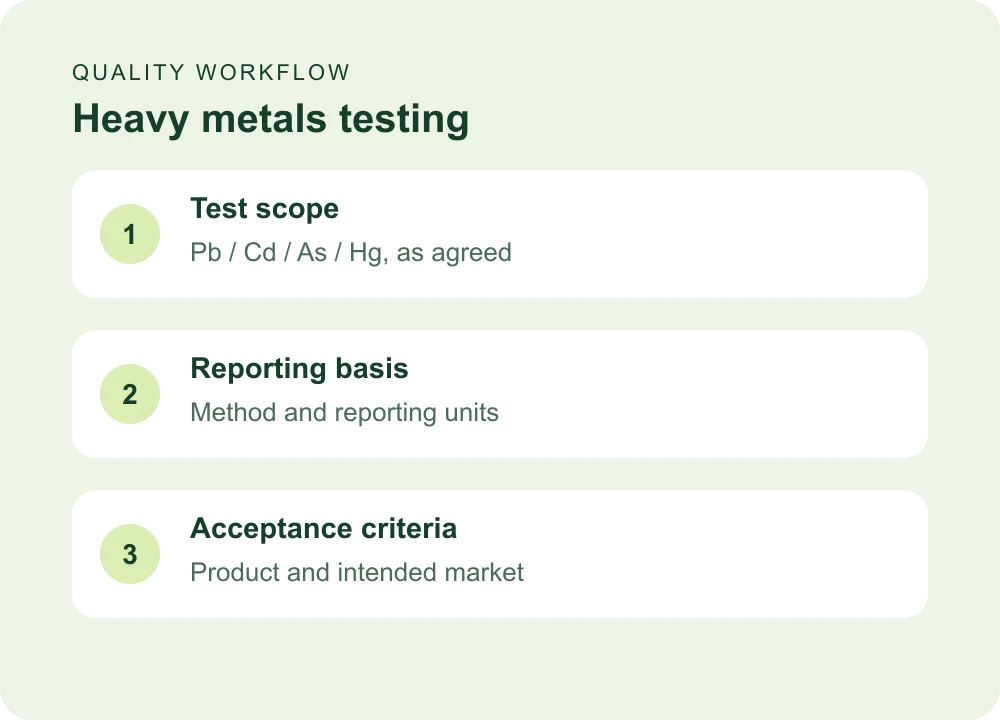
Make the heavy-metals review product-specific
Start with the gummy formula, intended market and the sample or batch being reviewed. Discuss lead, cadmium, arsenic and mercury with the quality team or laboratory, including which elements and reporting basis belong in the agreed test scope.
Read the results together with their reporting context
- Confirm the product name, sample identification and batch reference.
- Check the tested elements, method references and reporting units.
- Identify the detection or quantification information relevant to the reported result.
- Compare the result with the acceptance criteria agreed for the actual product and market.
A reported value needs its units and method context. A facility qualification document is a different record from a product-specific analytical report.
Prepare the right request for your quality team
Send the formula or ingredient direction, destination market and any available sample or order reference. Clarify whether you need to review an existing report or agree a testing plan for a proposed product. Available reports and any additional testing are discussed for that project.
Connect results to a batch COA · Explore batch traceability · Discuss heavy-metals documentation
Quality Management
Lead, cadmium, arsenic and mercury may be relevant to a gummy testing plan. Agree applicable limits, laboratory methods, reporting units and sampling frequency for the target market and product.
Applying the review to your order
Raw-material and finished-product test results describe different sampling stages. Keep each result connected to its material or product identification instead of treating an ingredient report as the finished-gummy batch result.
Gummy manufacturing questions
What should a heavy-metals test request specify?
Name the product and batch or sampling context, the agreed elements, the reporting units and applicable acceptance criteria. Discuss method and reporting-limit information with the quality team or laboratory.
Why review raw-material and finished-product results separately?
They describe different sampling stages. Keep each result connected to its material or product identification instead of treating an ingredient report as the finished-gummy batch result.