 GUMMY SUPPLEMENT OEM / ODM
Ingredient COA vs Finished-Gummy COA
Understand which material and batch a document actually describes.
Understand which material and batch a document actually describes.
Ask what the document actually describes
An ingredient certificate of analysis relates to a raw-material lot. A finished-gummy certificate of analysis relates to a manufactured product batch and the specifications agreed for that product. The two documents serve different purposes and should not be presented as interchangeable records.
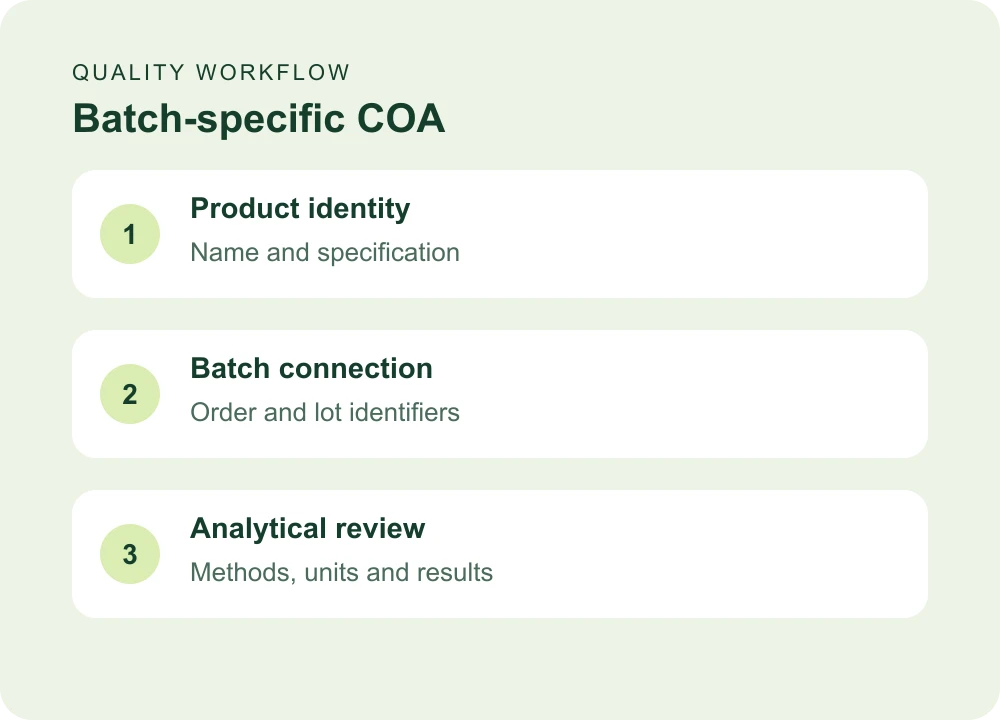
Begin by matching the document to the material or product name, lot or batch identification and the specification version being reviewed. If a supplier sends an example, identify it as an example rather than treating it as the record for your order.
Make the analytical scope explicit
List the parameters your team needs to assess, the relevant units, the agreed acceptance criteria and the method references. Discuss which results are reported for the finished product and which supporting information belongs to raw materials or manufacturing records.
Ingredient identity, formula composition and finished-product testing are connected decisions, but a result from one stage does not automatically establish the result at another stage.
Review the batch connection
Check that the finished-product name and batch identifier connect to the actual purchase and manufacturing record. Ask how the specification was approved and how a changed formula or package is reflected in the records.
A useful purchasing checklist includes the product name, batch number, specification reference, test parameters, units, results and the responsible quality review. Agree the required document format early so it can be planned into the project.
Build documentation into development
Discuss documentation during the product brief and sample review rather than waiting until shipment. That gives the quality team time to review the analytical scope and identify information that needs to come from ingredient suppliers, laboratories or production records.
Your next step: provide your intended market, product specification needs and required batch documentation with the project request. Review the resulting documents with your own qualified quality team before release.
Further reading: FDA manufacturing guidance for food and dietary supplements
Which document answers your purchasing question?
| Review item | What to confirm |
|---|---|
| Ingredient COA | Relates to the named raw-material lot and its reported tests. |
| Finished-gummy COA | Relates to an identified finished-product batch and the reported specification. |
| Facility certificate | Relates to the facility and scope identified on the certificate. |
| Stability report | Relates to the study samples, conditions, time points and measured attributes. |
Read the result together with the specification
A reported number needs context: the test name, unit, method and acceptance criterion. Check whether the report describes the agreed finished product or only one input. Do not treat a supplier ingredient document as proof that the same result was measured in the gummy batch.
Use a document request checklist
Identify the product and batch; request the specification version, reported test results and units; review report dates and the issuing organization; and ask about any difference between the report and the agreed order. Distinguish the tests included for the batch from additional work requested for a particular market.
Review the related MITEYO service · How we prepare these guides
Further reading
The FDA dietary-supplement manufacturing compliance guide provides US-specific context on specifications, quality controls and records. It is not a substitute for reviewing the requirements that apply to your actual product and destination.
Gummy manufacturing questions
Is an ingredient COA the same as a finished-gummy COA?
No. An ingredient COA describes a raw-material lot. A finished-gummy COA relates to the manufactured product batch and its agreed specifications.
What is the first check when comparing two COAs?
Identify the material or product and the lot or batch described by each document. Only then compare the relevant parameters, units and specification context.